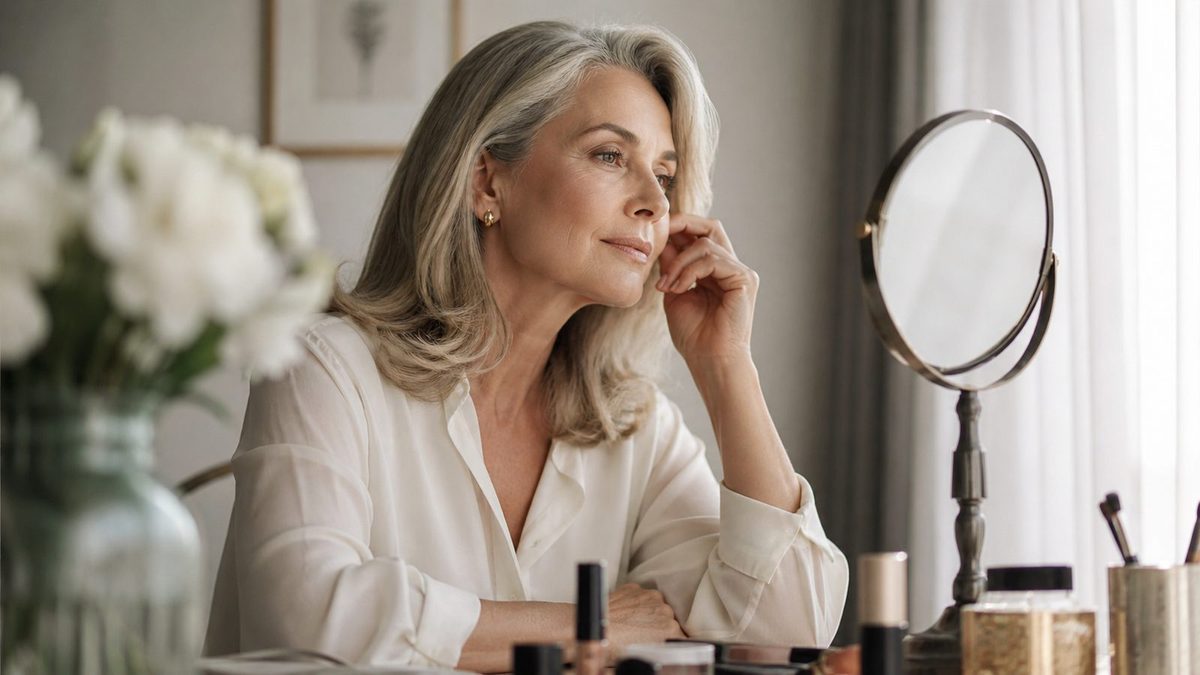
Blusher that’s bright at nine and invisible by noon isn’t magic; it’s mechanics. Mature skin changes the way pigments sit and move: volume shifts, mixed oil and dry zones, finer surface texture and creases where powder clings or slips away. The fix isn’t piling on more product — it’s smarter prep, smarter textures and smarter placement.
Start with the canvas
Think of cheeks as terrain, not a flat palette. Dehydrated areas make powders look dusty; oil-prone zones break down creams. Begin with targeted hydration: a light, fast-absorbing face moisturiser across the cheeks, avoiding heavy occlusives that can repel tint. Where your skin tends to shine through midday, apply a very thin mattifying primer only to those zones. Crucially: don’t prime everything the same way. A little selective prepping makes the difference between pigment that binds and pigment that migrates.
Rethink textures
The texture of the product matters more with age than the pigmented shade. Powders can lodge in fine lines and emphasize texture; thick creams can slide. The winners for many mature faces are soft creams, liquid-to-powder hybrids or stain-like tints that meld with the skin instead of sitting on top. If you prefer powder, reach for finely milled, buildable formulas and use them sparingly — applied over a slightly tacky cream base and pressed, not brushed.
Layer, but subtly
Layering is effective — when done with restraint. Start with a thin veil of cream or liquid blush, warmed between fingertips, and press it into the skin with a damp sponge or dense stippling brush. Build in hairline-thin layers until you’ve achieved the intensity you want. Then, where extra staying power is needed, add a whisper of matching powder in the highest-wear zones. The operative verb here is “press.” Brushing between layers stirs what you already laid down and encourages migration.
Placement, not apples
The “pinch and paint the apple” method worked on baby cheeks. On mature faces, the apples drop with time and pigment painted there can end up collecting in nasolabial creases or making the lower face look heavy. Instead, place blush slightly higher along the cheekbone, blending upward toward the temple. This technique lifts the face visually and keeps colour away from folds where it won’t last.
Tools and technique
Use a small, dense stippling brush or a damp sponge to press product into the skin. Fluffy brushes scatter product and emphasise texture. Warm cream formulas on your fingers before application — skin heat helps them bind. Apply in thin layers and build; thick single layers are more likely to oxidise, transfer or fade unevenly. For powder over cream, press the powder with a puff or the flat bottom of a brush rather than sweeping.
Powder and setting
Translucent powder is a tool, not a finishing coat. Dust it only where oil has started to break down pigment — extra mattifying across the whole cheek equals chalky, lifeless colour. A fine mist setting spray can help meld layers and reduce transfer, but test sprays on a small patch first: some formulas can disturb delicate cream layers. If you wear sunscreen or oil-based serums, try the routine on different days with different morning skincare steps to isolate whether a specific product is causing the breakdown — these are often the real culprits when colour fades early.
Shade and pigment density
Extremely bright, highly pigmented shades tend to age badly as they fade; muted, life-like tones read as healthy without shouting. If longevity is the problem, choose a formula that sinks into the skin rather than sitting on top — not necessarily a louder colour, just one with better adhesion. Avoid forcing heavy intensity; layered, believable colour looks fresher and lasts longer.
When nothing helps
If you’ve adjusted texture, placement and prep and blush still vanishes, test for interactions: sunscreen, facial oils, vitamin-serum residues and some primers can dissolve pigments. Try the routine on different days with different morning skincare steps to isolate the offender. Small, simple patch tests and observation will usually reveal whether a skincare step or a single product is the issue.
Quick routine
1. Targeted moisturiser; light mattifying primer only where needed.
2. Thin layer of cream/liquid blush, warmed and pressed in.
3. Optional tiny dusting of matching powder only where longevity is required.
4. Light mist to meld layers (test first).
5. Blush placement higher on the cheekbone, blended upward.
This isn’t about Instagram-perfect cheeks. It’s about believable, lasting colour that works with how skin changes. Thin layers, pressed not swept, and lift your placement — that’s how blush stops disappearing.