Make Lipstick Sit Like Skin, Not Velcro
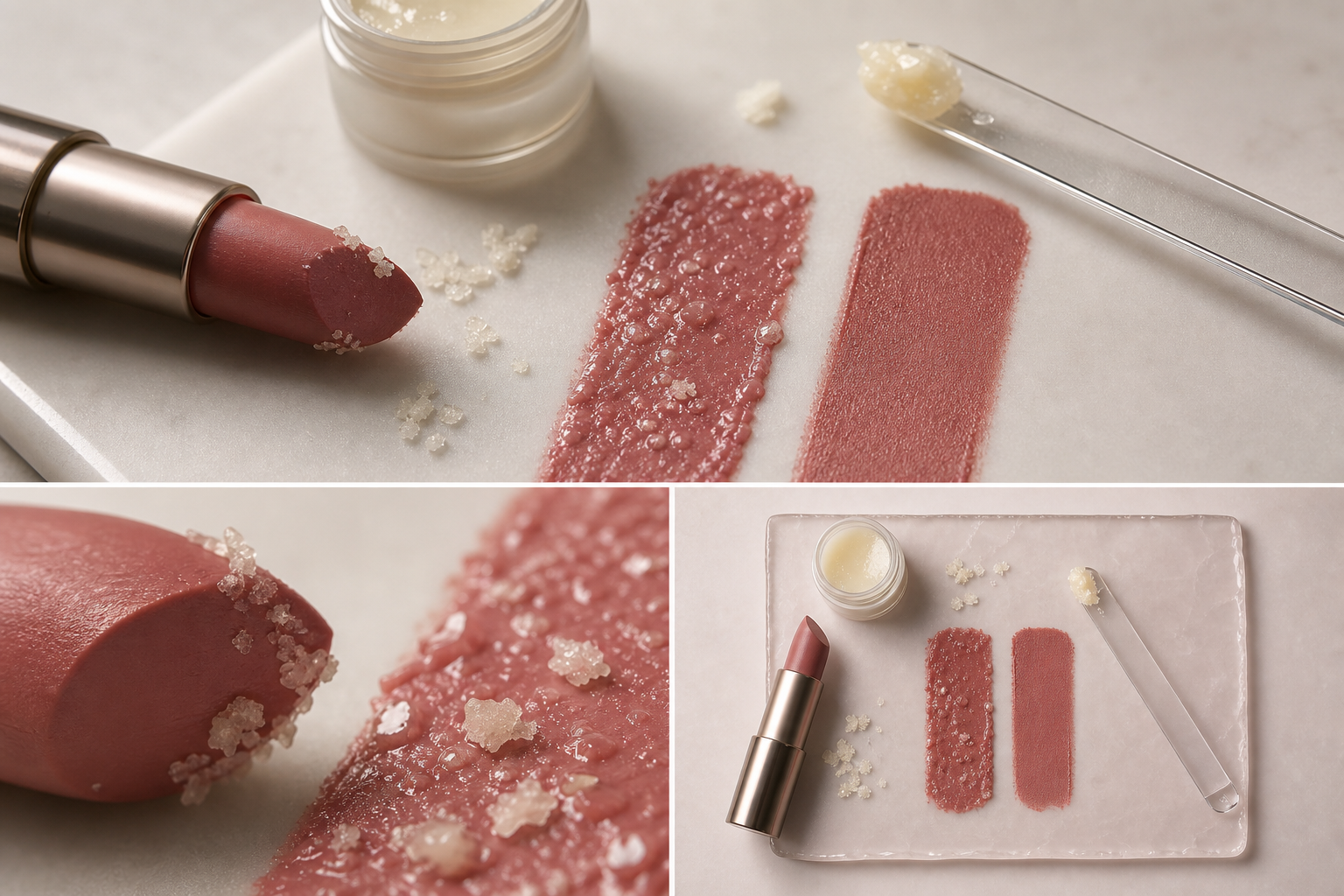
Thick balms, wet product and stubborn surface flakes are the usual suspects — here’s a sharp, practical routine to stop lipstick snagging on dry patches and make colour sit like skin, not Velcro.
You swiped a nourishing balm, waited a beat, then applied your favourite lipstick — only to find it catching on flaky skin and leaving uneven streaks. It’s not bad luck or a guilty lipstick formula; it’s texture and timing. Heavy balms can sit unevenly, trapped flakes lift into the colour, and applying pigment at the wrong moment amplifies the problem. Below: a clear, no-nonsense routine and the precise things to avoid so your lipstick lays down smoothly.
The problem in plain mechanics
Lipstick — especially dense mattes and high-pigment sticks — needs a uniform surface. Tiny flakes of dead skin create microscopically uneven anchor points. When pigment and wax meet those anchors, they either pick them up or pause, which looks like streaks, patches or a tugging sensation as you apply. There are three forces at work:
Surface flakes create visible patchiness, product timing leaves a tacky film, and matte formulations have less slip — which is great for staying power, less charming on a bumpy canvas.
A three-step routine that actually works
1) Exfoliate gently, then stop. Remove loose surface skin first, but don’t overdo it. Use a soft lip scrub, a damp muslin or a small, soft-bristled brush and work in tiny circles. The objective is a uniformly smooth surface — not raw, vulnerable lips.
2) Apply a thin balm, wait a few minutes, then blot. Use a thin layer of a hydrating balm rather than a slug of thick ointment. Give it time to absorb. If it still looks shiny, blot gently with a tissue so you nourish without leaving a greasy film.
3) Build colour with control. Creamy formulas should go on in thin layers, pressed or patted in rather than dragged across the lip. Mattes and long-wear sticks work best over a very thin, well-absorbed balm base, then layered with light blotting between passes. To set without adding texture, press a single ply of tissue over the lips and dust translucent powder through it.
The quick fixes that help — and the ones that don’t
Do: exfoliate selectively and gently, use a lip brush for precision when building colour, and blot excess balm before applying pigment.
Don’t: pile on more product to fix a patchy area, slather on a heavy balm right before a flat matte, or over-exfoliate in the hope of perfect skin. That usually makes flaking worse.
When texture keeps coming back
If you follow the routine and flakes reappear, reassess the products you’re using. Some balms and lipsticks contain actives or fragrances that can be irritating for some people; if your lips react repeatedly, try a minimal-ingredient balm and a gentle cleanser for the area. If there’s persistent cracking, soreness or bleeding, consider seeing a dermatologist. This article offers general skincare guidance and is not a substitute for professional medical advice.
Choosing formulas by problem
If texture is your enemy and you don’t need extreme staying power, creamy or glossy formulations are more forgiving. If you insist on matte longevity, the key is preparation: a very thin, absorbed balm, precision application and light blotting between layers.
Final tip
Treat the sequence like layering a garment: prepare the base, choose the right under-layer and then tailor the finish. Too much product at the wrong moment turns your lips into a sticky runway for flakes — and no lipstick looks good when it’s fighting the surface.