Stop the Melt: How Lid Moisture, Tightlining and Placement Make Your Liner Move
If your upper-lash liner reliably appears on the lower lash line by mid-afternoon, it isn’t bad luck — it’s basic mechanics. Natural oils, the tear film and the way your lids meet when you blink will migrate any creamy or tacky pigment downwards. Add tightlining or a heavy band of product on the mobile lid and you’ve set the conditions for transfer.
Start with diagnosis. Swapping for a different “long-wear” pencil is tempting, but it’s often lipstick-for-eyes — the wrong fix for the wrong problem. Work through these quick tests to identify whether it’s lid moisture, placement or formula/texture that’s to blame, then apply the minimal corrective that keeps the look you want.
Understand the mechanics
Lid moisture: Skin oils, sweat and tears collect along the lash roots and in the lid crease. Creamy or waxy liners sit in that micro-environment and are nudged down by every blink and lid-to-lid contact.
Tightlining: Applying pigment inside the upper waterline or deep between lashes places product where moisture is constant. It’s highly flattering but also high-transfer territory.
Placement and texture: Thick bands of product on the mobile lid or lines placed too high — where the lid folds — are literally designed to make contact with the lower lash area as you blink.
Two-minute diagnosis
Blot test: After your usual skin prep, blot the upper lid gently with a tissue. If visible oil transfers, lid moisture is a likely culprit.
Repeat-smudge test: Draw a thin line of liner, blink naturally for a minute, then check the lower lash area. If pigment appears without rubbing, placement or tightlining is probably responsible.
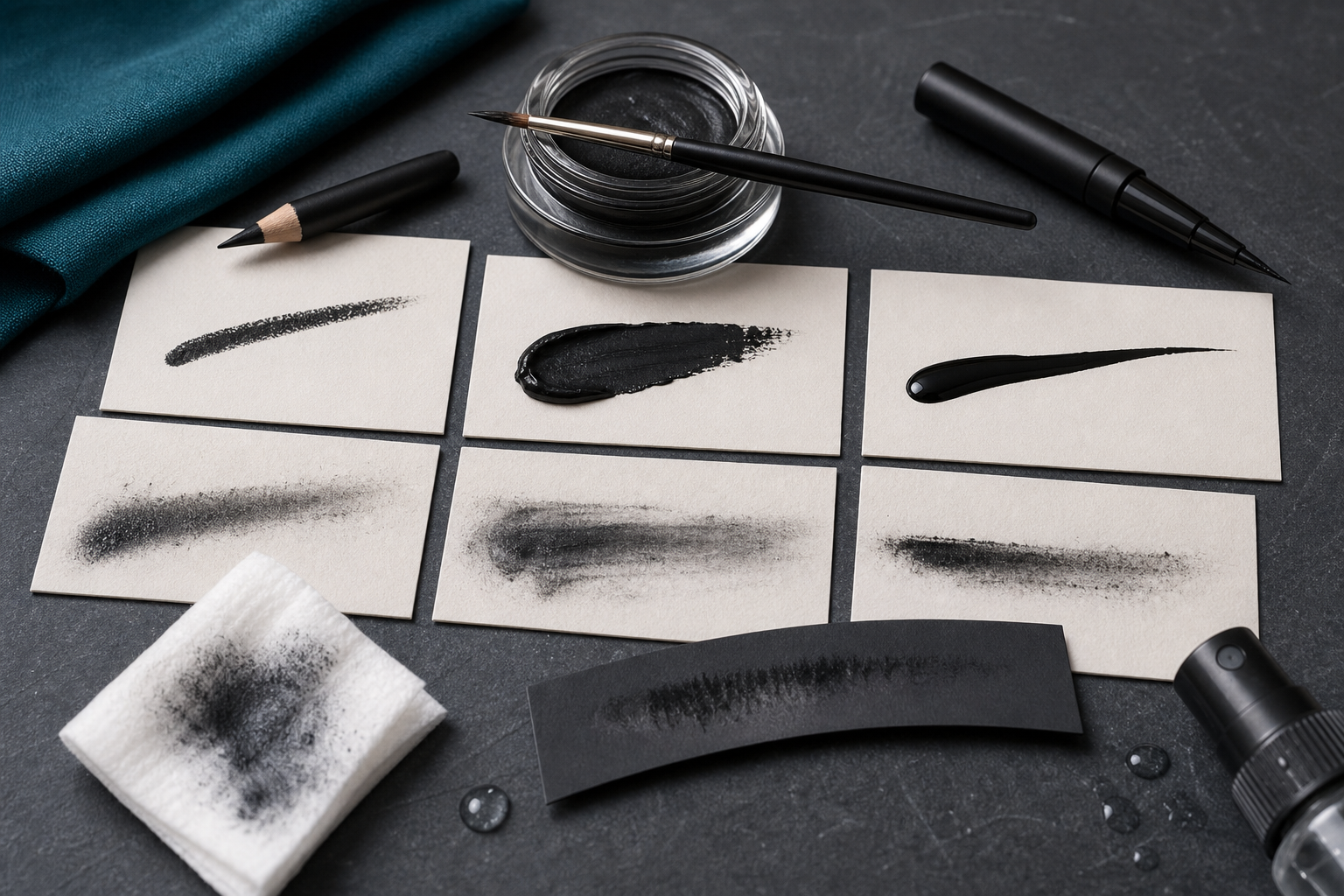
Formula test: On a clean lid, draw a thin liquid liner and a pencil line in different places. If the liquid stays and the pencil moves, texture is the issue. If both move, focus on placement or skin prep.
Practical fixes that don’t require new products
Thin the line and hug the lashes: Use less product. A very fine line placed as close to the lash roots as possible reduces the surface area that can transfer when the lid folds. A small angled brush with a matte shadow pressed into a thin gel line will also reduce migration.
Rethink tightlining: If tightlining transfers, shift the pigment to the base of the lashes on the skin side rather than inside the waterline. You retain definition without sitting in the tear film. For a softer approach, use a micro-pencil to dot pigment at the lash base and then smudge lightly; avoid packing pigment into the inner rim.
Blot and mattify: After cleansing and moisturising the face, blot the eyelids with a tissue to remove excess oil. A whisper of translucent powder pressed with a flat brush into the lash roots or a skin-friendly mattifying primer applied very sparingly can absorb oil without looking cakey. Use the minimum — the goal is to control surface moisture, not create a powdered lid.
Set with shadow, not dust: Pat a matte eyeshadow the same tone as your liner over cream or gel liner using a small flat brush. This locks pigment and reduces tack. Avoid heavy dusting across the entire lid, which flattens colour.
Choose texture strategically: Liquids that dry to a film generally resist transfer better than waxy pencils, but not always. Fast-drying pen liners and thin felt tips form a non-tacky film; creamy pencils and gels are more likely to migrate. The right texture is the one that withstands a controlled wear test on your skin and in your climate.
Tool up: A small angled brush and a tiny smudge brush are the workhorses here. Use an angled brush to press shadow over liner and a smudge brush or cotton bud for mid-day tidy-ups.
Midday rescue
A clean angled brush or a pointed cotton bud. A tiny travel-size micellar water or gentle eye makeup remover for precise cleaning. A compact matte shadow or translucent blotting powder and a miniature flat brush.
If the lower lash line collects stray pigment, dampen the cotton bud very slightly with remover, clean the area, then reapply a whisper of matching powder or shadow to disguise and reset.
When a bit of migration is your aesthetic
Some looks benefit from a lived-in or smoked-out smudge. If the smudgy lower lash line is intentional, choose softer pencils and diffuse purposefully. The rule here is: control the transfer so it looks deliberate, not accidental.
How to test properly
Real-world wear testing beats labels. Try the same liner and technique for several hours across different conditions (humid and dry). Record results without touching your eyes; apply the product in the morning and check mid- and late-day. If you intend to publish a product as “transfer-proof,” flag it for lab wear-test data or do an in-house controlled test.
Safety note on tightlining and the waterline
Applying products inside the waterline increases contact with the tear film and can raise the chance of irritation or infection if hygiene is lax. Use clean tools, avoid tightlining when your eyes are irritated or if you have an active eye infection, and follow any safety guidance on product packaging. Don’t share eye pencils or applicators.
Final note
There is no one-size-fits-all fix because skin oiliness, blink styles and eye shape vary. Start by diagnosing (blot, repeat-smudge, swap one variable at a time), then use the smallest intervention that preserves the finish you want. Less product and smarter placement often win over “miracle” formulas.