Why Your Powder Starts Looking Old After 50 — and What to Do About It
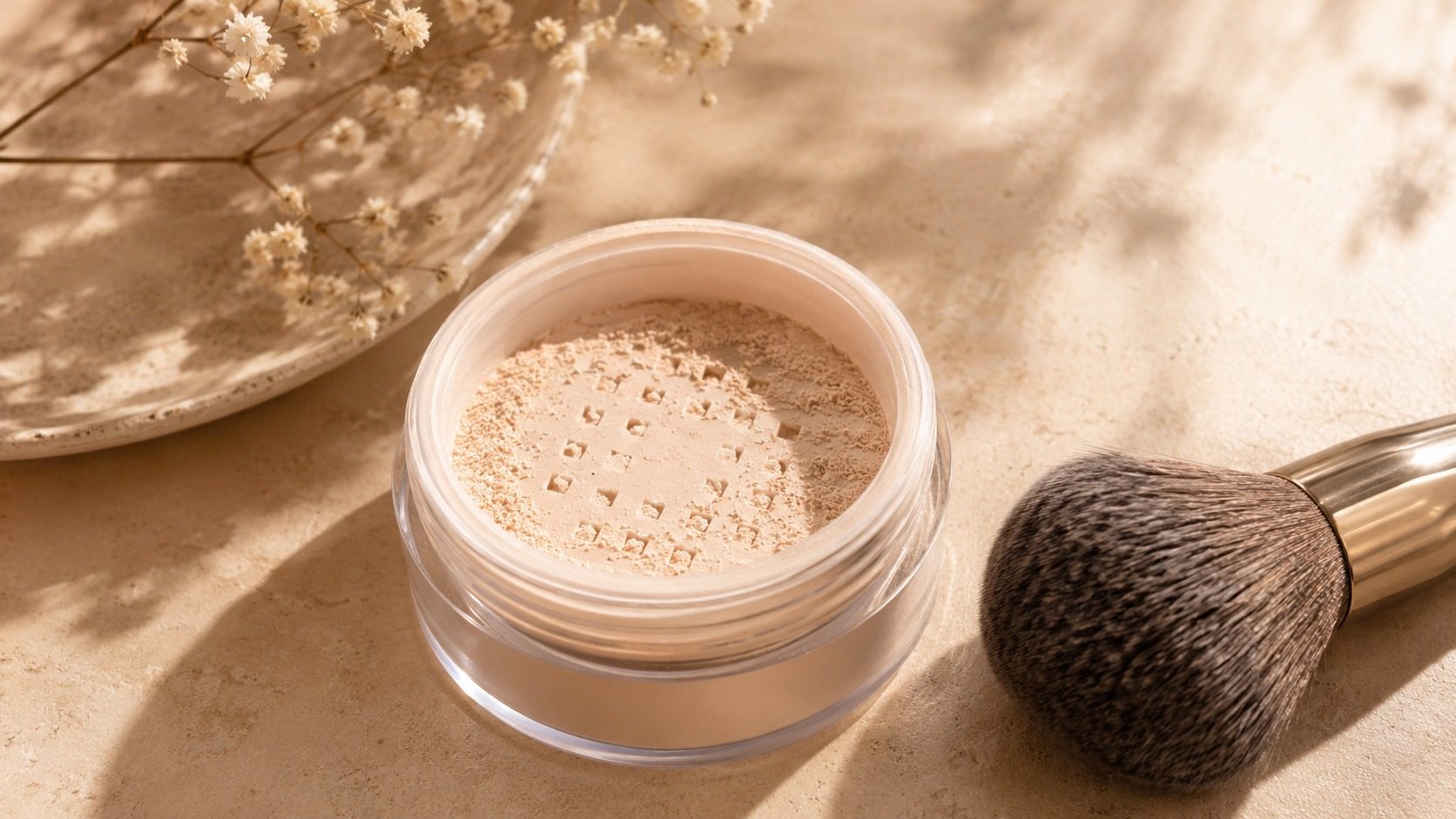
For decades the makeup bible was simple: set everything with powder and it’ll stay put. After 50 that rule can flip from utility to sabotage. The result isn’t a failing of makeup — it’s a mismatch between product and changing skin. Skin commonly produces less surface oil and often shows more visible texture and deepening lines, so a universal dusting now tends to sit on top, catch on ridges and flatten radiance. The face can read dry and powdered, not polished.
What’s actually happening
Skin tends to have less surface oil and can be overall drier, so powder is more likely to sit on the surface instead of integrating, which makes it look dusty rather than seamless.
Increased texture and crepiness commonly means pigments and powders collect in lines and along ridges, highlighting rather than hiding unevenness.
Hyper-matte finishes remove the soft depth that conceals shadow and contour; the face can end up flatter and older-looking.
Surgery, not industrial: swap “set everything” for strategy
Think of powder as a tool for specific problems, not the final act of every routine. Here’s a practical playbook.
1. Moisturise, then wait
Hydration matters more than ever. Apply a nourishing moisturiser and give it time to sink in — a damp surface is the enemy of even powdering. If skin feels tight, reach for a lightweight face oil or a hydrating primer before base products.
2. Powder only where you need it
Target the T-zone, inner nose, and any under-eye corner that creases. Skip blanket dusting across cheeks, temples and the jawline. Those areas benefit from preserved depth and sheen.
3. Prefer finely milled, skinlike textures
Choose very finely milled finishing powders or softly luminous formulas rather than heavy mattifiers. Powders overloaded with silica or extreme blurring technology can look chalky or cling to dry patches. Test textures on skin in natural light — not just in-store mirrors.
4. Build with creams and liquids
Let creams and liquids carry colour. Use cream blush, bronzer and highlighter and blend them into the skin; they sit in and move with texture more naturally. Powder should only lock specific zones, not replace the three-dimensional effect of creams.
5. Mind your tools
A large, fluffy brush gives a sheer dusting; a dense puff deposits heavy amounts. Use a soft, tapered brush and apply with a light hand — dust, don’t paint. For under-eye setting, use a tiny brush or a damp sponge to press a micro amount in; brushing will remove coverage and accentuate lines.
6. Blot first, then powder
If your skin is combination, blot oil-prone areas before applying powder. This avoids piling product where skin is dry and keeps the rest of the face untouched.
7. Try setting spray over excess powder
A spritz of setting spray can melt layers together, diminishing the need for heavy powder. Use it as a finishing touch to unify cream, liquid and any light powdering.
8. Tone matters
Purely translucent, bright-white powders can look ashy or flash under certain lighting. If you use a translucent product, test it in daylight and on camera. Consider a lightly tinted finishing powder that matches your skin tone for a subtler effect.
Under-eye, be surgical
The under-eye is where powder ages you fastest. Press a pinpoint amount into the outer corner with a damp sponge to stop creasing, but avoid a full under-eye dusting. Concealer plus a precise press is far kinder than sweeping.
When powder still makes sense
Powder isn’t the enemy. It controls shine, extends wear in humid conditions and can deliver a gentle blur. The difference after 50 is intent: use powder surgically — setting the problem spots — rather than as a universal finishing layer.
If your contour looks flattened or your foundation seems to exaggerate lines, it isn’t just bad product luck. It’s time to change the ritual. Prioritise hydration, cream textures and targeted powdering. The aim is longevity without stealing the face’s natural depth and movement.