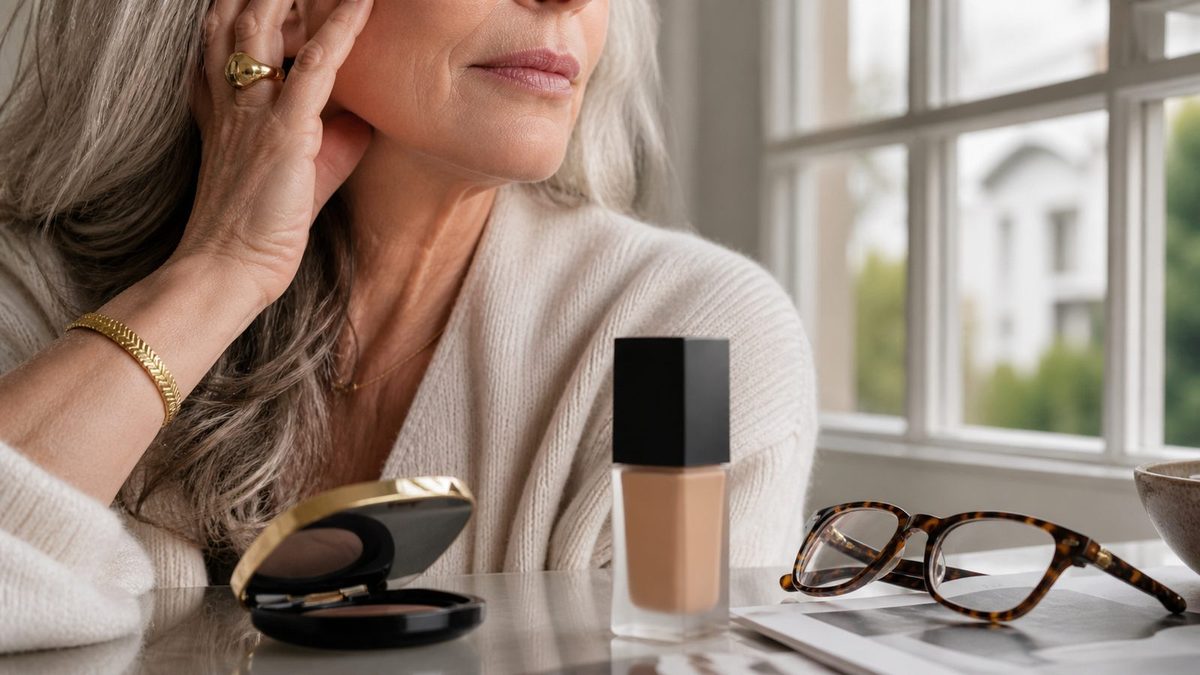
There’s a tiny betrayal that happens every morning: the face you approve in your bathroom looks flat, grey or oddly orange by the window. The problem isn’t vanity — it’s light. Natural daylight, which is broad-spectrum and generally cooler than most indoor bulbs, reveals true undertones, emphasises texture, and shows how pigments actually sit on skin. That means formulas and techniques that look fine under warm lamps often fail in real life.
Understanding what daylight does — without the tech-speak
Daylight is honest. It renders colour more accurately and lets highlights and shadows behave as they would in person. Heavy mattes can deaden depth; white-tinted pigments and chunky glitters shout; while sheer, skin-mimicking finishes translate better. Flash photography is a separate test: some formulas can reflect artificial light differently, so a product that looks convincing by a window may still behave differently on camera.
Which product families actually work in daylight
Sheer-to-buildable bases, including lightweight tints, serums and skin tints, let natural skin colour and texture show through. In daylight, less coverage preserves the face’s natural tonal variation so you avoid the “mask” effect.
Creams and balms for colour — think cream blushes and cream bronzers — sit in the skin rather than on it. They blend into the natural sheen and move with expression, which keeps colour believable as you turn your head and smile.
Soft-focus light reflectors, such as finely milled mica or soft-focus pigments, give dimension without emphasising pores. Steer clear of chunky shimmer or heavy white-reflecting powders for daytime.
Minimal, targeted powdering is the other quiet hero. Use a finely milled translucent powder only where oil breaks through the makeup, typically the T-zone. Thick, all-over mattifying powders can make skin look flattened and dull in daylight.
SPF considerations can also matter. Some formulations and cosmetic ingredients may alter how a product catches light, which can affect how a base or powder reads in photos. Any specific claims about particular SPF ingredient classes or their optical effects should be verified with a formulation expert before publication.
How technique beats product hype
Shade-match in natural light. Always test foundation at the jawline in daylight, at conversational distance. Match one colour that disappears into jaw and neck — not one that looks perfect on your hand or under an LED mirror.
Blend downwards. After applying, sweep any face product lightly down the neck to prevent a visible jawline line. This simple sweep fixes more “wrong in daylight” moments than most contour tricks.
Build, don’t bury. Start with a sheer layer and build coverage only where you need it. Pigments that look too soft in a lamp often read correctly after a little build; the reverse is true for heavy coverage.
Use placement over volume. A targeted dab of cream blush on the apple of the cheek, blended slightly up toward the temple, reads as a natural flush. Avoid the “painted on” circle of pigment that looks like a sticker in broad daylight.
Set, don’t seal. Finish with a light mist or a whisper of micro-finish powder only where longevity requires it. The goal is to lock things in without muting the skin’s natural catch of light.
Practical pre-exit checks (two minutes)
Step to a window at normal distance and check your face in a neutral expression, then smiling and moving your head. Watch how product sits in creases and catches light.
Take one quick photo in that same light. If something looks off, reduce, blend or soften — don’t add more product.
If you’ll be photographed with flash, do a quick test shot in the same conditions to confirm there’s no unexpected reflection. Any products recommended specifically for photographic use must be tested across a range of skin tones before being named.
When not to waste time
If a product’s main selling point is “full matte” or “camera-ready under club lights,” it may be brilliant for evenings and photos but not for day-to-day daylight wear. Some formulas are deliberately theatrical — useful in the right setting, but not everyday. Save them for night.
Bottom line
Daylight is a merciless editor — use it. Choose formulary families that let skin show through, prioritise creams and sheers for colour, and adopt a restraint-first application method: match in natural light, blend down, and build only where necessary. You’ll look like yourself — only the best, unfiltered version — when you step into real life.