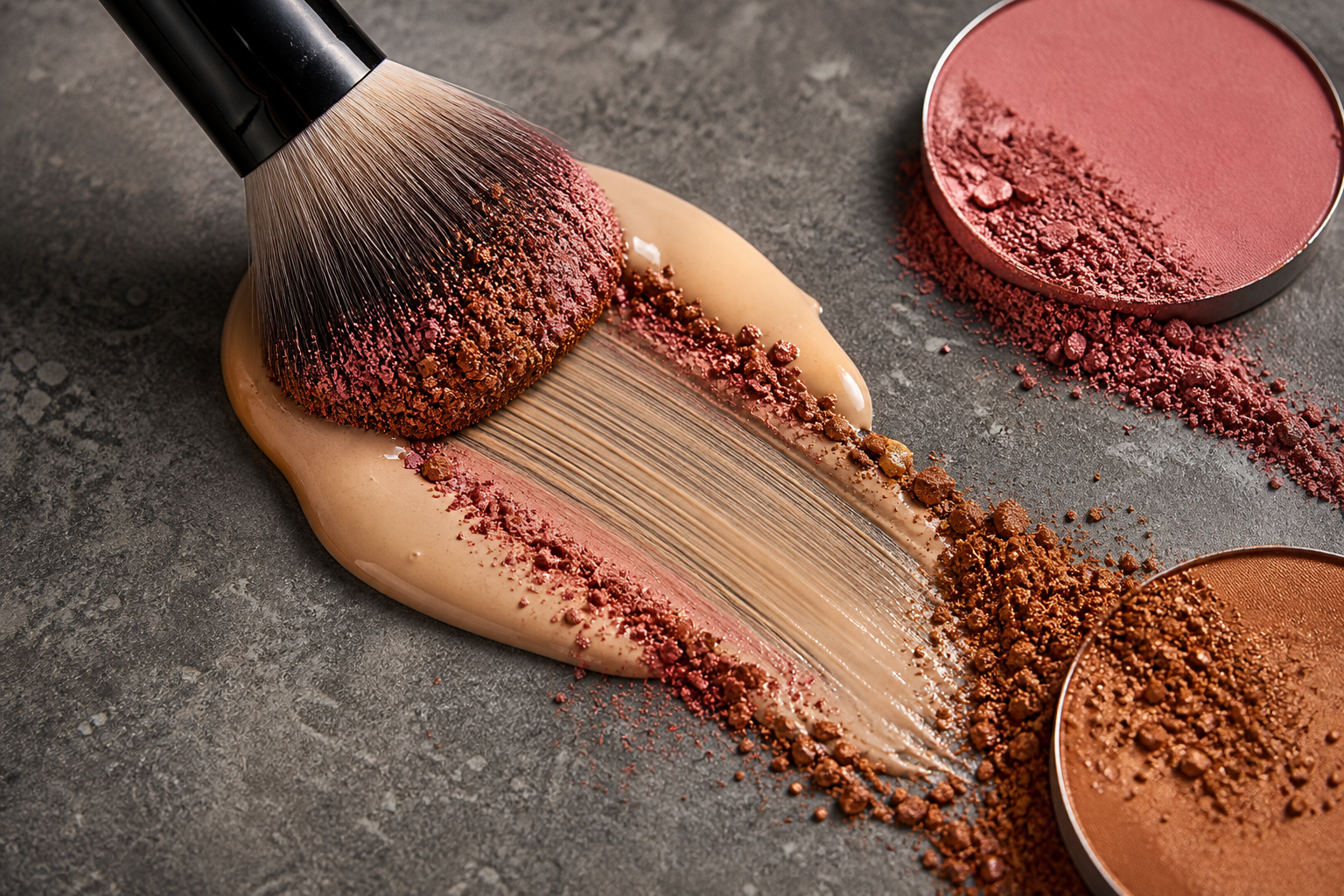
Your foundation looks even. Then you add bronzer, blend the edges and discover a pale streak where the base used to be. Blush catches in one patch and disappears from another. The temptation is to blame the foundation, but the culprit is often what happens next.
Colour can lift a base when the brush carries too much product, when the skin is still tacky, or when blending turns into rubbing. The fix is not another layer of foundation. It is a lighter hand and a little more control.
Start with less
A heavily loaded brush is difficult to steer. It deposits too much colour at once, then demands extra blending—the very thing most likely to disturb the layer underneath.
For powder, pick up a small amount and tap off the excess. For cream or liquid colour, take a little onto the back of your hand first rather than going straight from the product to your face. You can always add more. Removing an enthusiastic first swipe is much harder.
Place before you blend
Think of the first movement as placement. Press or tap the colour exactly where you want the strongest concentration, then soften only the outer edge.
A sponge, a compact brush or fingertips can all work. The important part is the direction of travel: up and down, not repeatedly across the skin. Long sweeping motions may look elegant in a tutorial, but they can move everything below them.
Let the base settle
A very fresh base is easier to disturb. Give foundation a short pause before adding colour. If one area still feels especially tacky, lightly blot it rather than piling powder over the entire face.
There is no universal rule that powder must follow powder or cream must follow cream. Plenty of combinations work beautifully. What matters is that the first layer has settled and the next one is applied sparingly.
Use the smallest tool that does the job
Oversized brushes make it easy to lose control. A slightly smaller brush places bronzer or blush more precisely, so there is less repair work afterwards.
Once the colour is in place, use a clean, soft brush—or the clean side of your sponge—to blur only the boundary. Do not keep polishing the centre of the cheek. That is where the colour and foundation are already doing their jobs.
Build the colour, not the pressure
If the result is too subtle, add another thin layer. Do not press harder.
Two light passes usually look smoother than one determined one, and they make it easier to keep both sides of the face balanced. Stop between layers and look straight ahead in ordinary light. Makeup often reads more strongly from a normal distance than it does inches from a mirror.
What to do when a patch has already appeared
Do not cover the gap with another heavy sweep of colour. Use a fingertip or small sponge to press a trace of foundation back into the bare area. Let it settle, then reapply blush or bronzer with a tapping motion.
If the same product combination lifts every time, change one variable at a time: use less colour, allow a longer pause, or try a different tool. That will tell you far more than replacing the whole routine at once.
The useful rule
Makeup sits in layers. Treat each new one as something to place, not scrub into submission.